




The Battle of White Plains
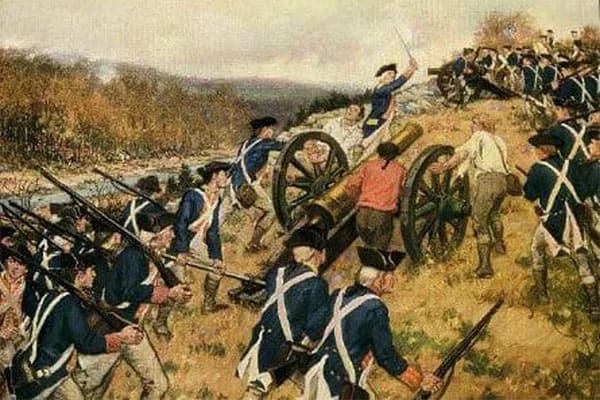
New York City had fallen into British hands, General George Washington’s Continental Army was retreating, and thousands of British and Hessian troops were determined to crush the rebellion. As American soldiers moved north through Westchester County, New York, they soon faced another test of their courage at White Plains.
The Battle of White Plains, fought on October 28, 1776, was more than another clash between two armies. It was a struggle for survival for a young nation that had declared its independence only four months earlier.
He decided to move his troops into Westchester County, hoping to protect his supply lines and keep the Continental Army from being surrounded. His destination was White Plains, a small settlement where the Americans could establish defensive positions and prepare for the British advance.
Washington’s army began arriving in the area during the middle of October. Soldiers worked to strengthen their defenses, digging earthworks and occupying strategic high ground. One important position was Chatterton’s Hill, overlooking the Bronx River. From this elevated ground, American troops could observe the surrounding countryside and challenge any British advance.
Meanwhile, British General William Howe moved his army toward White Plains. Howe had a powerful force of British regulars and German troops known as Hessians. He hoped to bring Washington’s army to a decisive battle and end the rebellion before winter arrived.
The fighting centered on Chatterton’s Hill, where American troops had established a defensive position. British and Hessian forces advanced against the American line, crossing the Bronx River and moving up the hillside under fire. The Americans resisted fiercely, but the British attackers gradually gained the advantage.
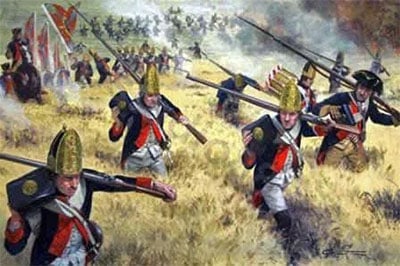
Eventually, the British and Hessian forces drove the Americans from Chatterton’s Hill. Washington’s troops withdrew to their main defensive position, and the British secured the battlefield.
The story of White Plains did not end with the loss of the hill. Washington’s army remained intact, and Howe did not immediately launch another major assault against the American defenses. Heavy rain and difficult conditions delayed further operations, giving Washington valuable time to consider his next move.
The Battle of White Plains was a tactical victory for the British, but it did not destroy the Continental Army. Washington had lost ground, yet he had managed to preserve the force that would be needed to continue the fight for independence.
For the soldiers who marched through Westchester County that October, the future must have seemed uncertain. They had watched New York City fall, endured repeated retreats, and faced an enemy with greater numbers and military experience. Many had little reason to believe that victory was near.
Washington understood that keeping his army alive was essential to keeping the cause of independence alive. At White Plains, he once again withdrew rather than risk the destruction of his entire force.
As we remember the Battle of White Plains, we should remember not only who held the battlefield at the end of the day, but also the determination of the men who continued to fight despite repeated setbacks.
For now, the soldiers at White Plains had endured another hard day in a war that was far from over. Their struggle reminds us that the birth of our nation was not guaranteed. It depended on men and women who continued to believe in independence even when the future looked bleak.
That is why their story matters. Our history is not simply a record of victories and defeats. It is the story of people who faced difficult choices, endured hardships, and helped shape the nation we know today.
Thank you for reading “Our History Matters. I always enjoy hearing from readers; contact me at tj.cox2023@outlook.com with your questions, comments, ideas, or suggestions.
