





What is an ombudsman?
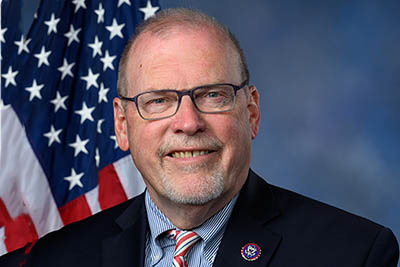
The end of our schools’ summer break means children return to school in Virginia’s Ninth District.
A new school year represents new opportunity for students to develop friendships, connect with fellow classmates, recount family summer vacations and more. For some, it means changing to a new school.
Connections in school are important for a child’s development. As the son of a schoolteacher, I like to stimulate classroom conversations by visiting schools and talking with students.
For my school visits this year, I went to Council High School in Buchanan County, Cornerstone Christian Academy in Washington County, Floyd County High School and Patrick County High School.
This May, I had the privilege to address the graduates of Thomas Walker High School in Lee County.
These settings are opportunities for me to engage our student populations and educate them on the duties of lawmakers.
As a Congressman, I share my experiences as a policymaker and as an ombudsman.
I clarify that my role as a policymaker focuses on matters of drafting legislation, committee debate discussing proposals, amendment recommendations and the final votes on bills.
But what is an ombudsman?
An ombudsman is one who interfaces with the federal government on behalf of others.
I act as an ombudsman for you on many occasions.
Thus, my office communicates with scores of federal agencies to address agency issues that constituents ask us about.
These issues vary by agency. But among the matters that demand our attention include passport requests and renewals, Internal Revenue Service (IRS) disputes and social security assistance.
In 2025, my office opened more than 1,175 constituent cases. Through this casework, we worked with more than 40 federal agencies.
There are multiple ways for us to open a case for you. An easy route is for you to give one of my district offices a phone call and speak with a representative in my office. Please refer to the end of this e-newsletter to access those phone numbers.
However, I recognize that you may prefer an in-person alternative.
Every month, my staff travels to all corners of Virginia’s Ninth District, which happens to span more than 10,000 square miles.
You can view when my staff next visits your locality by checking on my website at https://morgangriffith.house.gov/ or my Facebook page at Congressman Morgan Griffith.
These pages help people stay engaged on issues impacting my work in Congress and on behalf of the Ninth District.
My leadership on issues includes federal funding for Ninth District communities.
One program that I champion at the federal level is the Abandoned Mine Land Economic Revitalization (AMLER) program. As the leading Virginia advocate, AMLER projects identify idle mine land property and explore potential improvements and site redevelopment.
In late 2025, I attended an AMLER check presentation to support a nearly $2 million project in Buchanan County. This project will create the Southern Gap Office Park Building, a commercial office space within Buchanan County’s Regional Office Park. I left DC at 8:30 pm to make it to Grundy the next day because I considered the announcement so important.
AMLER delivers millions of federal dollars to our regions every year. With new projects set to be announced later this year, I will continue to fight for additional AMLER opportunities that benefit Virginia’s Ninth District.
A second federal program targets brownfields, which are properties or sites whose redevelopment are complicated by the presence or potential presence of a hazardous substance.
The Environmental Protection Agency (EPA) Brownfields Program delivers various federal grants to clean up these polluted sites.
When I served as Environment Subcommittee Chairman earlier in the 119th Congress, I held a hearing to spotlight the EPA Brownfields Program. As part of this, I invited Duane Miller of Scott County, who serves as Executive Director of the LENOWISCO Planning District Commission, to testify.