



The Fifth Virginia Convention
In June 1775, the English Royal Governor of Virginia, Lord Dunmore, slipped out of Williamsburg under the cover of darkness. He was rowed to a British naval vessel anchored in the York River. From there, he continued acting as Royal Governor from afar, supporting the King and Parliament while Virginia moved closer to revolution.
From his ships, Dunmore ordered attacks along Virginia’s coast. British forces fired cannons into Norfolk, landed troops to burn towns, and destroyed colonial supplies. In November 1775, he issued a proclamation promising freedom to enslaved people who joined the British Army. Fearing the growing Patriot movement, Dunmore refused to set foot on Virginia soil and eventually sent his family back to England for safety. By 1776, he had abandoned the colony entirely and returned to England. The British would never again rule Virginia, and Lord Dunmore would never return to his capital in Williamsburg.
On May 15, 1776, after nearly a year without royal government, the Fifth Virginia Convention assembled in Williamsburg with 112 representatives from across the colony. During this historic meeting, the delegates unanimously instructed Virginia’s representatives in the Continental Congress in Philadelphia to propose that the “United Colonies be declared free and independent states.” They also called for all allegiance to the British Crown and Parliament to be dissolved.
At the same time, Virginia’s leaders began drafting a new state constitution and a Declaration of Rights. The delegates understood that if they were to claim their rights had been violated, they first needed to clearly define those rights.
Following Virginia’s bold action, delegates in Philadelphia began work on what would soon become the Declaration of Independence.
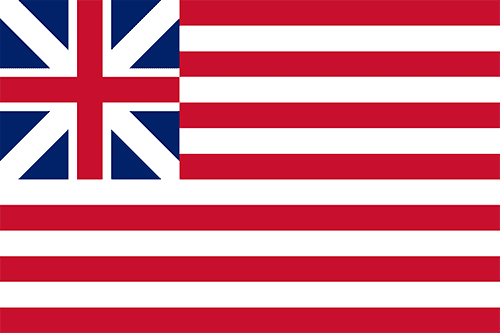
The citizens of Williamsburg celebrated the convention’s decision with great excitement. Cannons were fired in honor of the momentous vote, and the British flag was lowered. In its place, the Patriots raised the Continental Union Flag, featuring the British Union Jack in the upper corner alongside thirteen red and white alternating stripes representing the united colonies. This flag served as the banner of the colonies until the adoption of the Stars and Stripes in June 1777.
On June 7, 1776, Virginia delegate Richard Henry Lee rose before the Continental Congress and introduced what became known as the Lee Resolution. He formally proposed that the colonies “are, and of right ought to be, free and independent States.” His resolution set into motion the events that would lead directly to the Declaration of Independence.
Virginia became the first colony to officially direct its delegates in the Continental Congress to support independence from the British Empire. Seven other colonies quickly followed suit. It was the beginning of a new nation.
The Old Dominion. The future Mother of Presidents. The Commonwealth of Virginia. Our state. Our home. Our history matters to us all.
Thanks for reading “Our History Matters” by T. J. Cox.
Please send your opinions and thoughts to: tj.cox2023@outlook.com
