




The American Army Lives to Fight Another Day
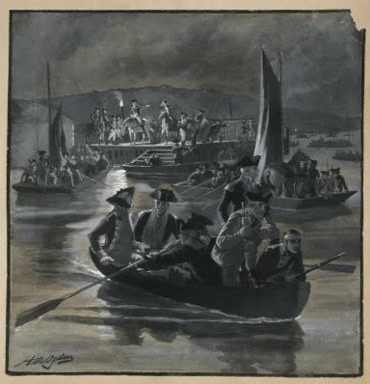 The Battle of Long Island ended on August 27th in a serious American defeat. General George Washington and the Continental Army had been pushed back to their fortified positions on Brooklyn Heights, with the East River behind them and the powerful British army in front of them. The situation was dangerous.
The British did not immediately launch an attack. Instead, they began digging trenches and slowly moving their lines closer to the American defenses. Rather than attack across open ground as they had done at Boston and suffered a lot of casualties, the British wanted to use their trenches to get closer to the American positions under cover.
Washington understood the danger, but he still needed to strengthen his defenses. On August 28, 1776, he ordered approximately 1,200 additional soldiers from Manhattan to Brooklyn. Pennsylvania regiments and Colonel John Glover’s Massachusetts regiment also arrived to reinforce the army.
Washington also began preparing for the possibility that the entire army would have to withdraw across the East River. He ordered General William Heath to gather every available flat-bottomed boat and sloop. The boats would be essential if the army was forced to abandon Brooklyn.
On August 29, Washington called his generals together to discuss the army’s situation. Thomas Mifflin strongly recommended retreating to Manhattan. He proposed that his Pennsylvania troops remain behind as a rear guard while the rest of the army crossed the river. The generals unanimously agreed that retreat was the best option.
Orders were issued that evening. Soldiers were told to prepare for a night movement, gathering their ammunition and baggage. The sick and wounded were among the first to be moved toward the ferry.
At about 11:00 p.m., Colonel John Glover and his Massachusetts soldiers began the evacuation. Glover’s men were experienced sailors and fishermen from Marblehead, Massachusetts, and their skills would prove invaluable. Under the cover of darkness, they quietly began moving soldiers, horses, artillery, supplies, and equipment across the East River to Manhattan.
The operation had to be conducted in complete silence. Wagon wheels were muffled, and soldiers were ordered not to talk. Fires were left burning in the American camp to make the British believe that the army was still in position.
A thick fog settled over the river and the surrounding area. The fog concealed the American evacuation from the British. British patrols began noticing that the American defenses appeared unusually quiet, but they did not immediately understand what was happening
Throughout the night and into the early morning, Glover’s men continued rowing back and forth across the East River. The operation continued as daylight approached.
By approximately 7:00 a.m. on August 30, the last American troops had reached Manhattan. Washington and the Continental Army had escaped from Brooklyn. The British had won the Battle of Long Island, but they had failed to destroy Washington’s army.
Washington had placed his army in an extremely dangerous position. His army was outnumbered, trapped against the East River, and facing a powerful British force. A successful evacuation required discipline, secrecy, skilled boatmen, favorable weather, and perhaps a little luck provided by the fog.
The retreat from Brooklyn did not win the battle, but it accomplished something even more important: it saved the Continental Army. Had the British captured or destroyed Washington’s army on Long Island, the American cause might have suffered a devastating blow.
The Battle of Long Island demonstrated that the Revolutionary War would not be easily won. The British now controlled New York Harbor and occupied New York City, which would remain an important British military stronghold for the rest of the war.
Washington had saved his army, and as long as the Continental Army survived, the American Revolution would continue.
Thank you for reading “Our History Matters. I always enjoy hearing from readers; contact me at tj.cox2023@outlook.com with your questions, comments, ideas, or suggestions.
I have compiled all of my “Our History Matters” articles published from March 6 through July 31 into a magazine-style booklet. The booklet is 64 pages in an 8½ × 11-inch format and contains every article in one convenient volume. Copies are available for $10.00, so contact me to purchase one.
