





The Right Man Chosen to Lead
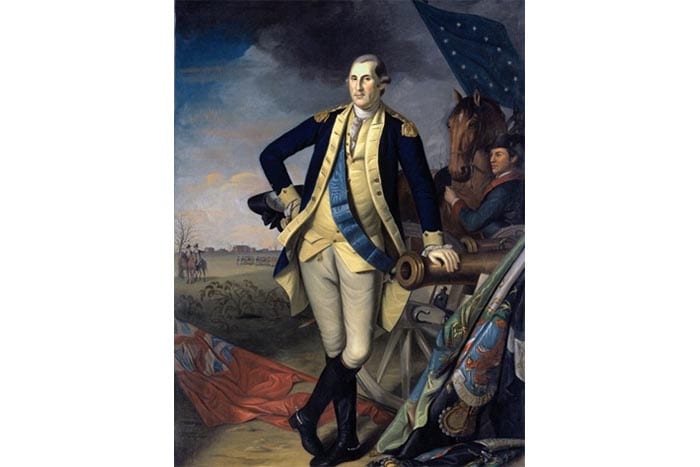 When the Second Continental Congress gathered in Philadelphia in May 1775, the American colonies were already at war with Great Britain. The sound of gunfire at Lexington and Concord had been heard throughout the colonies, and thousands of New England militiamen had surrounded the British army in Boston. What began as a protest against British policies quickly became a fight for independence. But one important question faced the delegates: Who would lead the American forces?
The man who would eventually receive that responsibility was a tall Virginia planter named George Washington.
Washington was no stranger to military service. Born in Westmoreland County, Virginia, on February 22, 1732, he had gained military experience during the French and Indian War. He had served under British command, experienced the hardships of frontier warfare, and learned valuable lessons about military leadership. Although his military career included disappointments, he had earned a reputation for courage, determination, and discipline.
By 1775, Washington was also one of Virginia’s most respected citizens. He had served in the Virginia House of Burgesses and had become increasingly involved in the growing dispute between the colonies and Great Britain. He believed Parliament had pushed the colonies too far and supported the colonial resistance.
When Washington arrived in Philadelphia for the Second Continental Congress, he wore his military uniform. His appearance was not accidental. He wanted the delegates to know that he was prepared to serve if called upon.
Congress had already begun taking steps toward creating a united army. On June 14, 1775, it voted to establish the Continental Army by adopting the New England forces surrounding Boston. The following day, the delegates turned their attention to choosing a commander-in-chief.
John Adams of Massachusetts strongly supported selecting a leader from outside New England. He believed that appointing a Virginian would help unite the southern and northern colonies behind the cause. Washington’s military experience, reputation, and standing in Virginia made him an excellent choice.
Adams formally nominated George Washington for the position of commander-in-chief. The delegates agreed, and on June 15, 1775, Congress unanimously elected him to lead the newly established Continental Army.
Washington accepted the appointment, but he did something that revealed much about his character. He told Congress that he did not consider himself equal to the responsibility being placed upon him. He also announced that he would not accept a salary for his service, asking only that his expenses be reimbursed.
On June 16, Washington addressed Congress and formally accepted the command. He understood that he was accepting a tremendous responsibility. American forces were poorly equipped, disorganized, and had little experience fighting as one army. Across the Atlantic stood the powerful British military, considered one of the world’s strongest fighting forces.
The next day, June 17, the Battle of Bunker Hill took place outside Boston. Although the British eventually captured the American positions, their heavy losses demonstrated that the colonial soldiers could stand and fight against British regulars.
Washington left Philadelphia and traveled north to take command of his army. On July 3, 1775, beneath an elm tree on Cambridge Common in Massachusetts, he formally assumed command of the Continental Army.
The task before him was enormous. He had to bring together men from different colonies, establish military discipline, find supplies, and transform a collection of local militia companies into an army capable of challenging Great Britain.
George Washington could not have known then that the struggle would last eight long years. He could not have known that his army would face bitter winters, shortages, defeats, and tremendous hardships before victory finally came.
But the delegates in Philadelphia had made their choice. They had selected a Virginian to lead an army representing thirteen colonies. In doing so, they had placed their hopes for liberty in the hands of a man who would become one of the most important figures in American history.
Thank you for reading “Our History Matters. I always enjoy hearing from readers; contact me at tj.cox2023@outlook.com with your questions, comments, ideas, or suggestions. Thank you again.
