




The Fall of Fort Washington
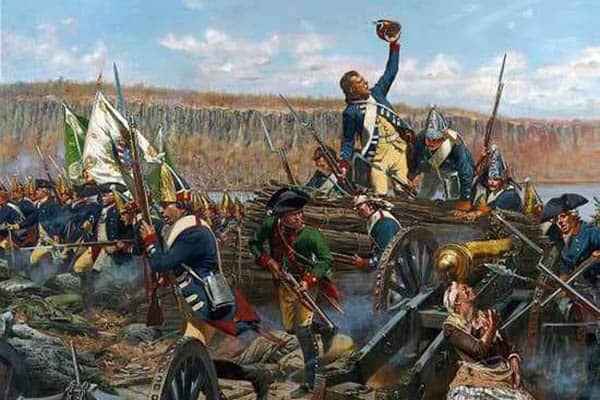
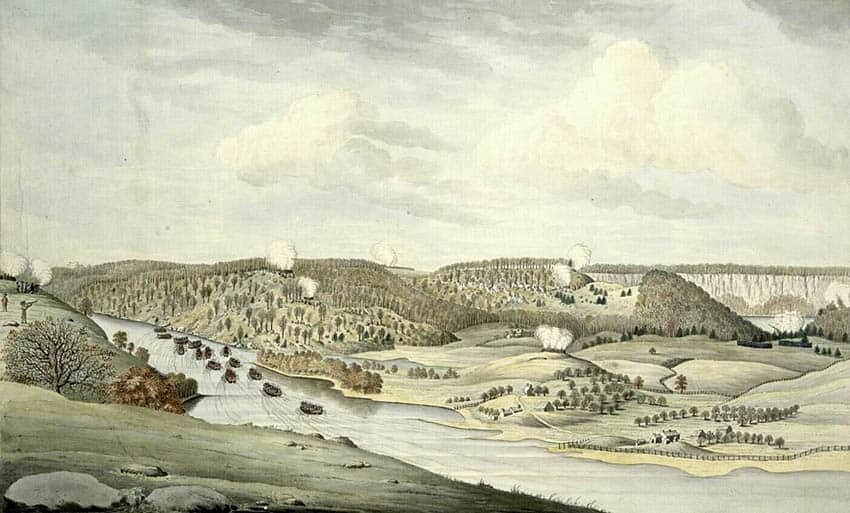
The morning of November 16, 1776, brought a terrible test for George Washington and his Continental Army. On the northern end of Manhattan Island, overlooking the Hudson River, about 3,000 American soldiers were preparing to defend Fort Washington. Across from them stood a much larger British and Hessian army, determined to capture the stronghold and take control of the Hudson River.
Fort Washington had been constructed earlier in 1776 on the highest ground of northern Manhattan. Along with Fort Lee, located directly across the Hudson River in New Jersey, it was intended to prevent British warships from traveling up and down the river. The fort was named in honor of General George Washington and was considered an important part of the American defenses surrounding New York City.
On October 28, Washington suffered another defeat at the Battle of White Plains. British General William Howe now turned his attention toward Fort Washington, the last major American stronghold remaining on Manhattan Island.
Washington had serious concerns about defending the fort. He understood that the position could become isolated and that the British possessed a much larger army. However, some of his officers, particularly General Nathanael Greene, believed the fort could be held. Greene argued that abandoning it would surrender an important position overlooking the Hudson River.
The American commander responsible for defending the fort was Colonel Robert Magaw. He had approximately 3,000 Continental soldiers under his command. Facing him were British and Hessian forces under General William Howe, numbering approximately 8,000 men in the main assault force.
On November 15, the British sent an officer under a flag of truce to demand the surrender of Fort Washington. Colonel Magaw refused, declaring his determination to defend the position.
The following morning, November 16, the British and Hessians launched their attack. The assault came from several directions. British forces under General Hugh Percy advanced from the south, while Hessian troops under General Wilhelm von Knyphausen attacked from the north. Other British forces, commanded by Generals Charles Cornwallis and Edward Mathew, advanced against the American defenses from the east.
The fighting was fierce. American soldiers initially resisted the attacks, but the overwhelming numbers of British and Hessian troops began forcing them backward. One after another, the American defensive positions fell. The remaining defenders were pushed toward the fort itself.
Colonel Magaw continued resisting, but the situation was becoming hopeless. Around three o’clock that afternoon, after attempting to negotiate better surrender terms for his men, Magaw agreed to surrender Fort Washington.
2,900 American soldiers became prisoners of the British. The British also captured valuable military supplies, including 34 cannons, ammunition, and other equipment.
Among those who fought at Fort Washington was Margaret Corbin, a remarkable woman from Pennsylvania. Her husband, John Corbin, served with the American artillery. When he was killed during the fighting, Margaret continued serving at the cannon until she was seriously wounded. She survived the battle and later became the first woman to receive a military pension from the United States government for her service in the Revolutionary War.
For George Washington, November 1776 was one of the darkest periods of the Revolution. His army was weakened, supplies were running low, and many soldiers were approaching the end of their enlistments. The future of the American cause looked uncertain.
The surrender of Fort Washington was a painful chapter in our nation’s history. Nearly 2,900 American soldiers lost their freedom that day, and the British gained control of an important strategic position.
Yet the story of the American Revolution was far from over. Sometimes the history of a nation is not measured by its victories alone, but by the determination of those who refuse to surrender their dreams when defeat seems certain.
Thank you for reading “Our History Matters. I always enjoy hearing from readers; contact me at tj.cox2023@outlook.com with your questions, comments, ideas, or suggestions.
