




Clinical Trials
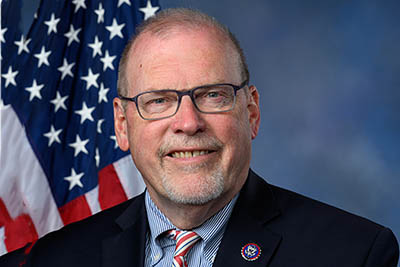
In DC, majority and minority parties impact the art of legislating.
The majority party in office controls the daily legislative agenda, wields greater representation on committees and sets the chamber rules.
As a result, the minority party has less say in contributing to the legislative process.
However, as a matter of governance, there are many opportunities for the majority and minority to engage on policy in a bipartisan manner.
One such opportunity is the Faster Clinical Trials Act. Massachusetts Democratic Congressman Jake Auchincloss came to me shortly after I became Chair of the Health Subcommittee with an idea to modernize clinical trials and reform some aspects related to medication and treatment approval at the Food and Drug Administration (FDA).
As Chairman, I asked Auchincloss to work with my health care team to develop actual language to facilitate what I believe to be a great idea. After a year of us working together, we agreed on an expansive bill which not only benefits patients doing clinical trials, but specifically includes opportunities for rural patients to participate in such trials.
I recently co-introduced this bill along with Auchincloss.
Clinical trials serve patients like those with rare diseases. Medical researchers lead the trials to help test potential new treatments and medical breakthroughs for these patients.
While participation in these trials is open to the public, certain patient groups are underrepresented, particularly those in rural communities.
Depending on the type of clinical trial and where you are in Virginia’s Ninth District, the closest clinical trial may be in Charlottesville, Bethesda or Cincinnati.
This places patients in a difficult situation where they question if it is worth the time, the effort and the attention to seek care for their rare illness.
The Faster Clinical Trials Act supports a new and more inclusive landscape where patients can stay closer to home and participate through local health care settings. Our bill creates clinical trial opportunities in community health centers, rural facilities and other underserved settings.
Accordingly, researchers will be able to integrate clinical trials into routine health care delivery.
With this solution, rural communities including those in Virginia will be better represented in our clinical studies!
When it comes to patient and researcher representation, the U.S. needs greater data.
That is why the proposed model in our bill pushes for an increase in U.S. patient representation in clinical trials as well as strengthening oversight of foreign clinical research.
Moreover, the oversight of clinical research moves one step further as the Faster Clinical Trials Act establishes a National Biobank Program.
The National Biobank Program would collect, store and generate molecular data and analyze biological specimens and clinical data. Program participation requires representation from every U.S. State and territory, including urban and rural populations.
By expanding the pool of patient participants, particularly in rural communities, our researchers will be able to more effectively and thoroughly study rare diseases.
As a result, rural patients’ access to care and treatment discovery will improve!
In addition to these provisions, our bill updates cancer drug development. And it authorizes the use of artificial intelligence in lieu of testing on animals.
Taken together, these ideas constitute a substantive proposal that revamps the U.S. clinical trials process, advances American medical research and accelerates the development of new treatments for patients.
The limited calendar for this Congress means that action on the Faster Clinical Trials Act is unlikely by the end of the year. However, Congressman Auchincloss and I remain committed to working with each other in the next Congress to gather widespread support for our bill.
This joint legislative effort proves that it is possible to get things done for the American people.
Notwithstanding the bipartisan collaboration discussed above, there will be areas where working together is not possible.
As someone who previously served in the minority party in both the Virginia House of Delegates and Congress, I recognize there will also be times that require me to stand up and defend the conservative values of Virginia’s Ninth District. That means stopping radical Democratic proposals to take your guns, open our borders and raise your taxes.
Accordingly, I am committed to using whatever resources available to stop radical Democrat ideas.
While governance in the minority for the 120th Congress will look different from the Republican majority in the 119thCongress, I will continue to work with my colleagues on issues that serve the interests of Virginia’s Ninth District.
If you have questions, concerns, or comments, feel free to contact my office. You can call my Abingdon office at 276-525-1405 or my Christiansburg office at 540-381-5671. To reach my office via email, please visit my website at https://morgangriffith.house.gov/. Also on my website is the latest material from my office, including information on votes recently taken on the floor of the House of Representatives.