




A Letter Without a Correct Title
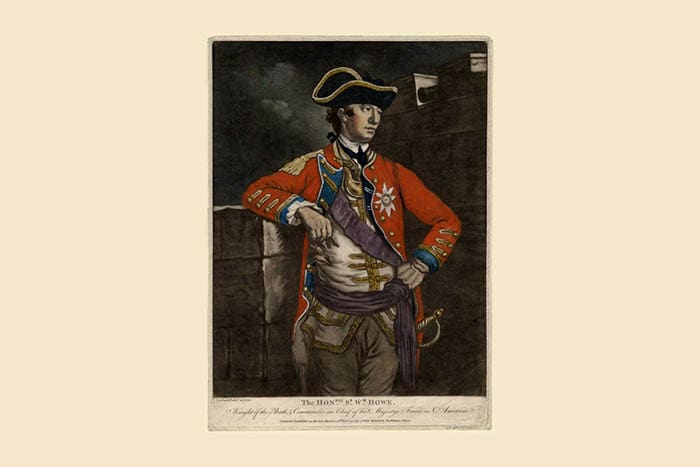 In the summer of 1776, America stood at a turning point. The thirteen colonies had declared their independence from Great Britain, but that bold decision guaranteed war. As thousands of British soldiers and sailors gathered around New York City for a massive invasion, British leaders made one final attempt to avoid bloodshed.
On July 13, Admiral Richard Howe, commander of the British naval forces in North America, sent a naval officer across New York Harbor under a flag of truce with a letter for General George Washington. The messenger’s boat was stopped by an American ship before eventually being allowed to continue.
When Washington learned of the British request, he consulted with his senior officers. They agreed that the issue was about far more than delivering a letter. It was about whether Great Britain would recognize Washington as Commander in Chief of the Continental Army.
Colonel Joseph Reed and Colonel Henry Knox met the British officer, who explained that he carried a letter from “Lord Howe to Mr. Washington.” Reed immediately replied, “Sir, we have no person in our army with that address.”
The officer then produced the letter, addressed to “George Washington, Esq.” Reed again refused to accept it, explaining that Washington could not receive official correspondence that ignored his military rank. Accepting the letter could suggest that Washington remained simply a British subject rather than the leader of an independent American army.
The messenger returned to the British fleet with the letter undelivered.
Although the disagreement appeared to center on a title, it represented a much deeper issue. Britain refused to recognize the authority of the Continental Congress or the legitimacy of the American government. Washington understood that accepting the letter under those terms could weaken the American claim to independence.
Admiral Howe was not ready to give up. On July 20, he made another effort by sending Lieutenant Colonel James Patterson to meet personally with Washington. Patterson hoped to persuade the American commander to accept Howe’s letter and begin discussions about prisoner exchanges and other matters.
Patterson was escorted to General Henry Knox’s headquarters, where Washington received him with courtesy and dignity. Knox later recalled that Washington was “very handsomely dressed, and made a most elegant appearance.” He believed Patterson seemed deeply impressed by Washington’s calm confidence and commanding presence.
During their meeting, Washington remained respectful but unwavering. He explained that he could not accept correspondence addressed merely to “Mr. George Washington” because he represented the Continental Army and the newly declared United States. More importantly, he made it clear that the conflict had moved beyond disagreements with Britain. America had declared its independence and intended to defend it.
Washington informed Patterson that if Admiral Howe wished to conduct official negotiations, he would need to communicate with the Continental Congress in Philadelphia. The question was no longer one between a British admiral and a colonial officer. It was between Great Britain and a nation that claimed to be free and independent.
The meeting ended without agreement. Howe’s final effort to restore peace had failed. Within weeks, British and American forces would collide in the Battle of Long Island, beginning the largest military campaign of the Revolutionary War.
The events of July 13 and July 20, 1776, demonstrated how completely the relationship between Great Britain and the colonies had changed. What seemed to be a dispute over titles was actually a struggle over sovereignty and national identity. Britain refused to acknowledge American independence, while Washington refused to surrender the dignity and authority of the office entrusted to him.
History reminds us that independence was secured not only on the battlefield but also through principled leadership. By insisting that the commander of the Continental Army be recognized as such, George Washington affirmed that the American Revolution was no longer a protest against British policy. It was the birth of a new nation determined to stand on equal footing with the powers of the world.

July 22, 2026 @ 10:05 am
Very educational and interesting!