




The Boston Tea Party
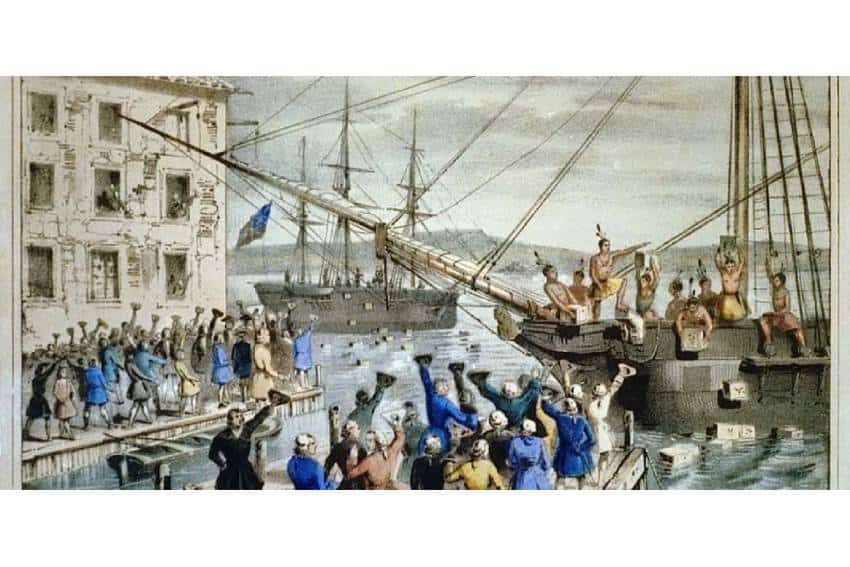 We have all heard of the Boston Tea Party, but many wonder why it happened. Samuel Adams said, “The Boston Tea Party was a protest against taxation without representation.”
The Colonists were getting more upset with British Rule and looking for new ways to protest. They were not happy and did not want to be forced to pay taxes without any voice in what and how much they were to be taxed. In May 1773, the Parliament of England passed the “Tea Act,” which imposed a new tax on tea. Unlike today, there were not many coffee drinkers in 1773 in the colonies; the majority of people drank tea. After the Boston Tea Party, the colonists started drinking more coffee instead of tea.
The new tax was very upsetting because the colonists had no representation in Parliament. The colonies’ governors were appointed by England and the people’s voices were not being heard. They felt it was a violation of their rights as Englishmen. The tea tax helped the East India Company make more profit. They had a monopoly on importing tea from China into the colonies. All seagoing trade had to be with Britain; they were not allowed to trade with any other countries. However, they did smuggle some tea into the colonies from the Dutch traders. This made the tea cheaper because they didn’t pay the tax. It had to be unloaded up the rivers instead of in the harbor.
Finally, on December 16, 1773, members of the “Sons of Liberty”, these were men who were meeting, planning, and working together to help the colonists protest against the rule of England. They disguised themselves as Mohawk Indians and boarded the East India Company ships in Boston Harbor. They broke open 340 boxes of tea and threw the contents into the cold waters of the harbor. Crowds gathered, cheering on the men for their bold and courageous protest against the English Tea Tax. The people in the colonies were coming together and turning against British rule.
The waters of Boston Harbor became thick with floating tea leaves and busted wooden tea crates — a visible sign of the colonies’ growing resistance to British authority. The protests would continue as more people joined, encouraged, and supported the rebellion against England. The Boston Tea Party slogan of “No taxation without representation” would continue to be the rallying cry for the colonists.
By T. J. Cox
